
About ABRE
SUPPORT
The packaging market in Brasil is highly technological, combining sustainable, cost effective and innovative solutions. Access the packaging market in Brazil via ABRE, the Brazilian Packaging Association! We support you to reach Brazilian companies as: packaging materials and machinery producers, packaging and accessories, design offices and much more.
It acts as a hub in the packaging ecosystem, we create collaborative networks and we build a vision of the future to support the acceleration of the sector and the shared knowledge.
We walk with our associates for the sustainable development and for the valorization of the national packaging and the professionals of the sector.
It follows the movements of the new economy to stimulate competitiveness and we understand what is relevant in the world and in other industries to disseminate information.
OPPORTUNITIES
Access to environments that provide opportunities for generating business.
Expand knowledge, have access to relevant information to support your conversations and presentations, as well as the company's strategic decisions.
To be part of the pool of companies included in the entity that officially represents the sector with Society, Government and Private Initiative.
Increase your network of relationships through access to players in the sector, all links in the productive chain of packaging and consumer goods.
Participation in ABRE groups, which is exclusive for members.
Exclusive access to data, information and insights we receive through our national and international connections.
Broaden your business's view of the new movements taking place in Brazil and in the world that impact our sector.
Promote your business through our communication tools.
BUSINESS
We operate with a focus on the development of our associates along with their business dynamics. We are connected with all the movements and new models that appear in Brazil and in the World that can impact our sector, where we help our associates to extract the maximum opportunities and value for their businesses.Our purpose is to develop, capitalize and build a continuous and mutually beneficial relationship with our associates based on the transparency and ethics of the entity’s performance.
SUSTAINABILITY
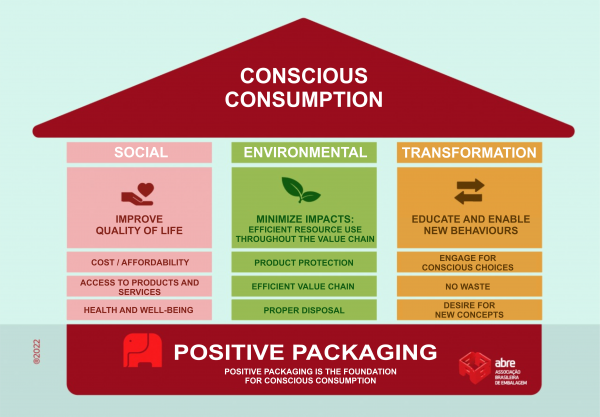
We act on the theme of sustainability from the strategic and tactical levels, where the actions are divided into initiatives that enhance recycling in Brazil through environmental education, support to companies in new projects aiming at circularity, the continuous elaboration of tools to direct the sector in its sustainable development through the activities of the Sustainability Area, and the representation of the sector in different spheres for the presentation of initiatives, construction of positive agendas, and dialogue with society.
EDUCATION
ABRE in its purpose of being the reference and connection to provide knowledge and build the packaging ecosystem to accelerate sustainable development, the Education pillar is within its role.Taught by market experts with extensive experience in the industry, ABRE Packaging Courses were structured as short-term modules and aim to present to participants, through an updated approach, the main themes that involve the universe of packaging, in a format dynamic and practical approach, where the methodology includes the effective participation of students for problem solving, case studies and debates, which ensures the best assimilation of the content.
WORK GROUP
Important tool for building knowledge on topics related to the packaging sector.Bridge for integration among associates, where we bring in-depth discussions about the strategic segments of performance and development of the entire production chain.Opportunity for member companies to connect with the main players in the sector and get closer to customers and prospects, in addition to developing new partnerships.
Food and Bev
Cosmetics
Domestic Cleaning
Pet Food and Pet Care
Health and Pharmaceuticals
MARKET INTELLIGENCE
Area that gathers market information and assists associated companies in guiding the legislation in force, related to the packaging market, as well as assists those associated with the collection of requested data, search for suppliers.
MEMBERS
Our members are from the entire packaging ecosystem: packaging converters, input manufacturers, design agencies, consumer goods industries, among others.
-
Brainbox
-
Cingulum
-
Ecocircular Consulting
-
Ecopópuli
-
Fam Die
-
Fwsandri Consultoria
-
Howtopack Consultoria
-
Mudrá Planejamento de Embalagens
-
Multittech Engenharia Ltda
-
Pack & Strat – Diagnóstico e Melhoria No Sistema Embalagem
-
Packtalk
-
Rubinei Rosa
-
Side – Sistema Integrado da Diversidade de Embalagens
-
Walber Representações Comerciais
-
Yattó
3corações
3m do Brasil
Aché Laboratórios
Ambev
Avon
Brf Pet
C.vale
Cepêra Alimentos
Coca-cola Brasil
Dhpb
Grupo Boticário
Heinz Brasil S.A.
Hypera Pharma
Johnson & Johnson do Brasil
Kimberly Clark
Laboratórios Pierre Fabre do Brasil Ltda
L´occitane Au Brésil
L´oréal
Mondelez International
- Monsanto do Brasil
Nestlé
Ourofino
- Pandurata Alimentos
Pepsico Brasil
Phisalia
Rb Brasil
Sallve
- Santa Massa
Syngenta
Unilever Brasil
Vedacit
- Amcor Flexibles Latin America
-
Camargo Embalagens
- Canguru Plásticos
-
Converplast
-
Embaquim
-
Gualapack Brasil
-
Inapel Embalagens
-
Iqx
-
Luciana Sousa – Finepack Embalagens
-
Valgroup
-
Zaraplast
100% Design em Movimento
A10 – Consultoria de Design e Marca
- Agência Bud
Bendito Design
Cba B+g
Engenho Brand Communication And Inspiring Packaging
Futurebrand São Paulo
Landini Design
- Mind The pack
Narita Strategy & Design
Obah Design
Palp Studio
Pande
Quadrante Design
Sapien Design
Sgk
Sgs & Co (southern Graphics)
Studio Dot Artes Graficas
Tátil Design
Team Créatif
Zoom Mais Comunicação Design
Bignardi Papeis
Ecoinova Brasil
Plastiweber
Selo Eureciclo
Ahlstrom Brasil Industria E Comercio de Papeis Especiais LTDA
Alpha Clicheria
Ampacet
Avery Dennison do Brasil
Avient
Beontag
Braskem
Cba
Comprint
Dow Brasil
Dupont
Engeflex do Brasil
Evertis Brasil
Exxonmobil Chemical
Futamura
Gerdau Graphene
Grupo Activas
Ibema Papelcartão
Innova
Klabin
Macdermid Graphics
Md Papeis
Mitsui & Co.
Nissha Metallizing Solution
Oji Papeis Especiais
Papirus Indústria de Papel S/A
Presto Fresh-lock
Res Brasil®
Rhodia Brasil S.A
Siegwerk Brasil
Smurfit Kappa Brasil
Solenis
Suzano Papel e Celulose
Swm
Tecnofilme
Termotécnica
Terphane
Zip Pak
Contact ABRE at abre@abre.org.br